
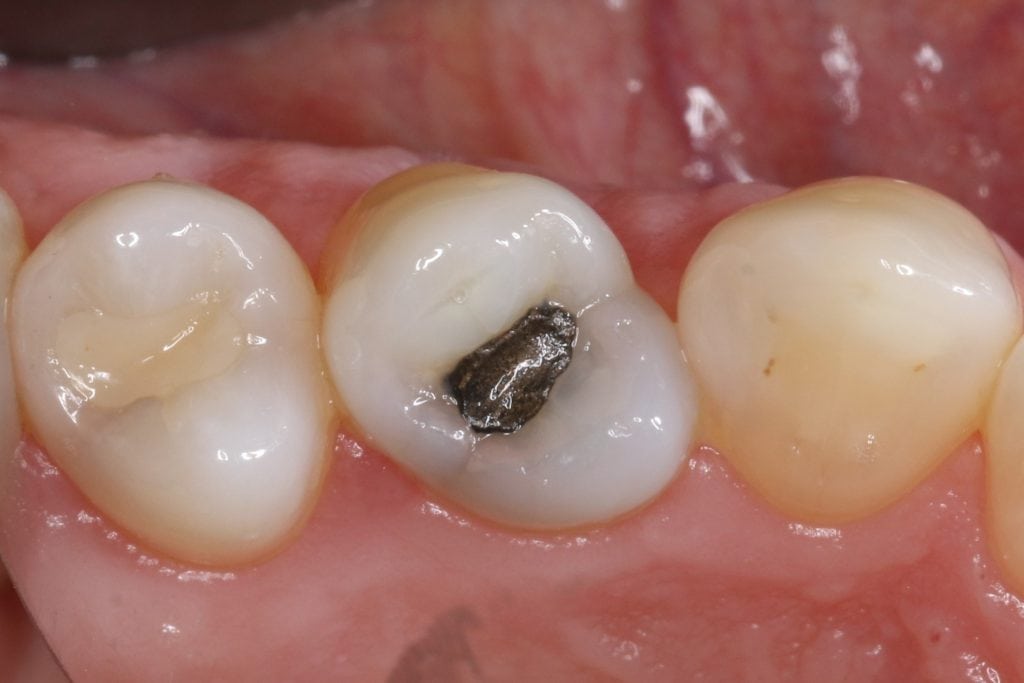
There is ongoing debate about amalgam fillings because they contain mercury, which in large amounts can be toxic. Here’s a summary of the key facts:
Is an amalgam filling dangerous?
Yes and no. Amalgam fillings contain about 50 % elemental mercury, but it is bound in a solid alloy with other metals (silver, copper, tin), making it stable.
- For most people it causes no problems, and according to the WHO it is considered safe as long as it is properly placed and intact.
- Over time, however, fillings can wear down and release tiny amounts of mercury vapor—especially when chewing or under heat.
- In sensitive individuals (for example, those with a mercury allergy or certain autoimmune conditions), replacement may be worth considering.
Can it be replaced safely?
Yes, but only with proper precautions:
- To prevent inhalation or swallowing of mercury vapor or particles, the dentist uses protective equipment such as a rubber dam, high-volume suction and special ventilation.
- The procedure must follow a specific safety protocol.
When is replacement advisable?
- If the filling is cracked, shows decay underneath, or causes dark discoloration.
- If you have health issues you suspect might be linked to mercury exposure (e.g. headaches, fatigue, metallic taste).
- If the thought of having mercury in your mouth causes psychological discomfort—this alone can be a valid reason, provided the removal is done properly.
At Evidental, we provide safe amalgam removal following all recommended safety protocols.