

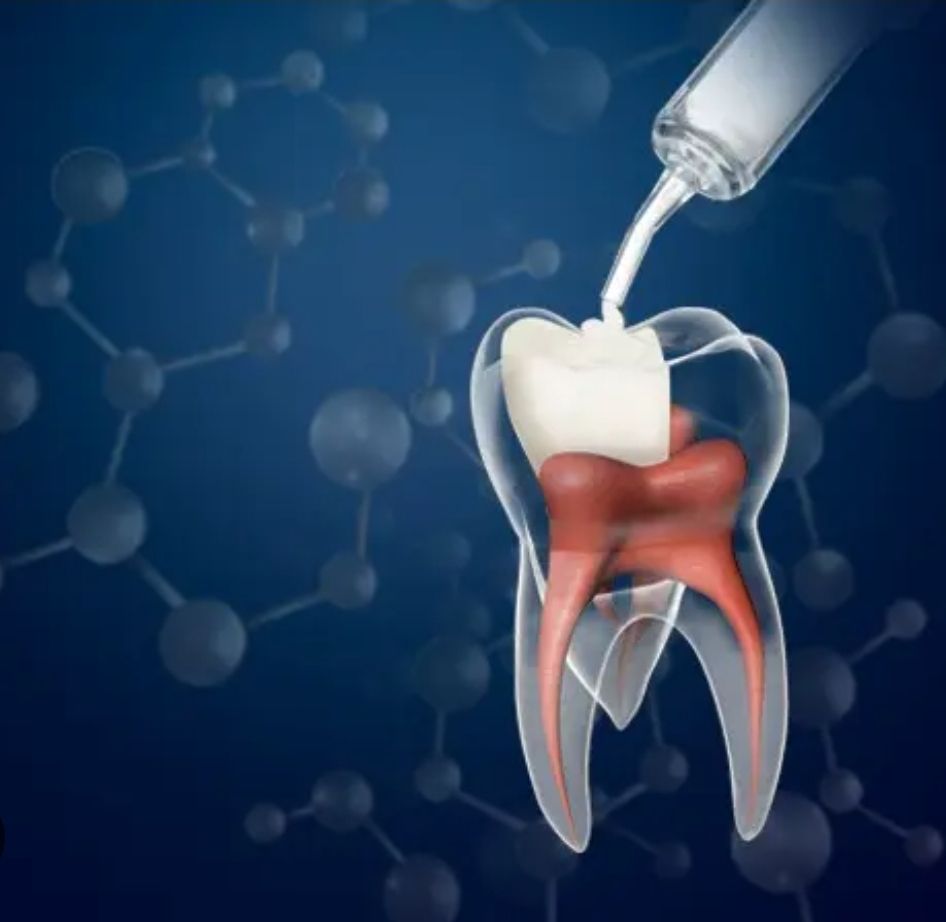
Over the past 10–15 years, endodontics—the branch of dentistry focused on saving teeth through root canal therapy—has advanced more rapidly than almost any other field.
New tools (such as operating microscopes and endo-CBCT imaging) and modern materials have raised the success rate of root canal treatment to unprecedented levels.
Nevertheless, saving the tooth in this way always means losing the dental pulp (the nerve and blood supply).
Why preserving the pulp matters
The presence of the dental pulp offers important advantages:
- Sensation of heat, pressure and pain
- Nutrition for the tooth via its internal blood supply
Keeping the pulp alive helps extend the tooth’s lifespan and maintain its full natural function.
Modern techniques to avoid root canal treatment
Because of these benefits, research and development have long focused on keeping deeply decayed or traumatised teeth vital—that is, maintaining or regenerating the pulp.
As a result, new biocompatible materials such as Biodentin have become widely available, giving teeth once destined for root canal therapy a second chance.
With Biodentin it is possible, in selected cases, to preserve or partially preserve the tooth’s nerve and blood supply through procedures such as:
- Vital pulp therapy
- Indirect pulp capping
- Direct pulp capping
- Pulpotomy
Important considerations
These treatments are not suitable for every tooth or every situation.
Factors such as the extent of destruction and whether the tooth can be properly restored must be carefully evaluated.
The best way to avoid root canal therapy: prevention
Regular, thorough home care—combined with annual dental check-ups and X-ray diagnostics—is still the most reliable way to detect problems early and prevent deep decay or damage that could otherwise make root canal treatment unavoidable.
