
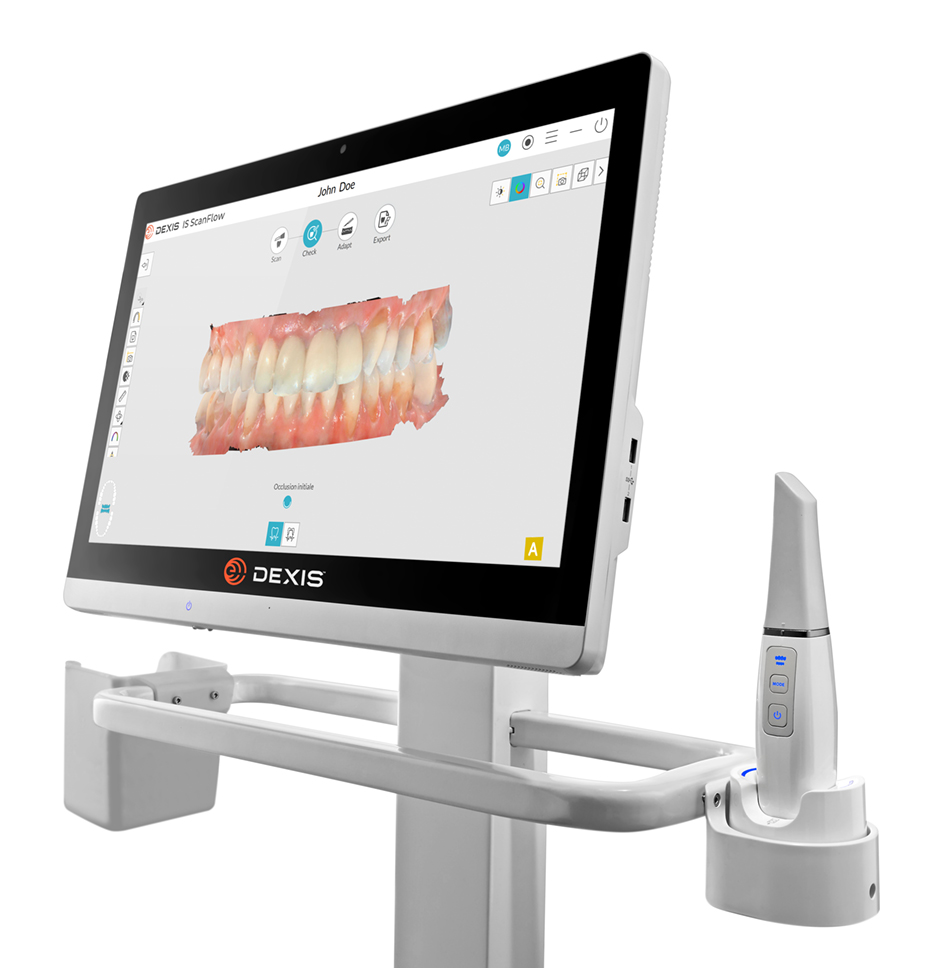
When I was a child, dental impressions were no longer taken with plaster, though our parents could certainly tell stories about that.
By the time I was at university, I took my first impressions using dental silicones. These plastic impression materials, which promised great convenience for both patients and dentists, delivered increasing accuracy year after year.
In 2021, dentistry finally entered the era of digital impressions and digital workflows. In addition to 3D diagnostics, 3D scanners and 3D printers have now also become part of the healing process.
The following photos show the steps involved in creating teeth for implants using cutting-edge technology.
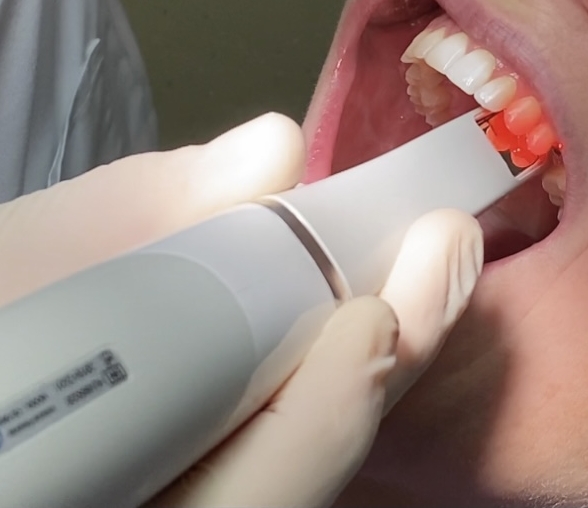
The file containing the scans of the teeth and implants is sent by email to the dental laboratory.
The digital impression is then followed by digital design work in the dental lab.
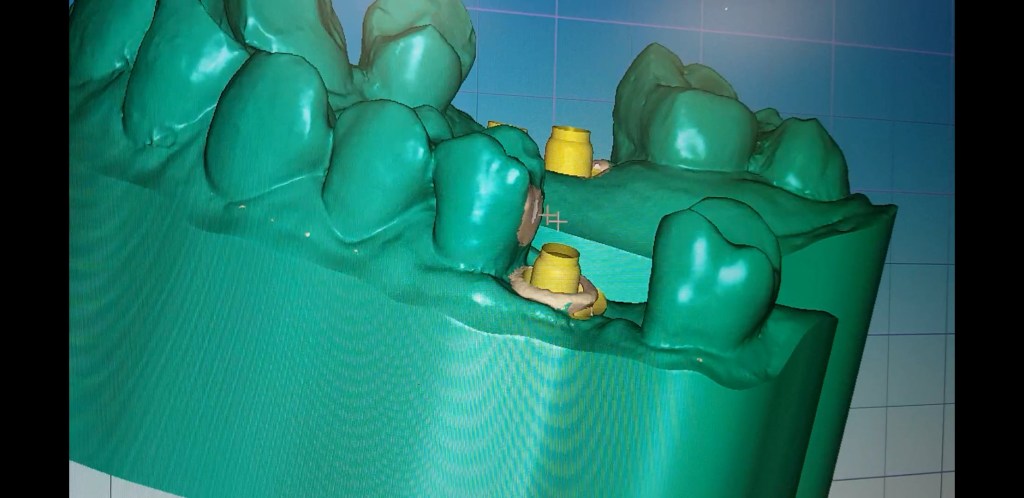
To cover the designed crowns with porcelain of the desired tooth shade, lifelike replicas of the dental arches are produced using a 3D printer.

The color-accurate porcelain coating can then be completed as the final step in making the crown.
