
Their appearance in the mouth usually occurs in our early twenties and we often regard their eruption as a confirmation of our mental maturity. We are happy about them—as long as they do not cause pain or problems. Such issues, however, often arise during eruption.
A panoramic X-ray and oral examination can give a clear picture of whether they will erupt in the right direction and whether they will indeed be useful.
At university we are taught that these teeth have a “variable value.” If the adjacent molars have had to be removed, their presence can become particularly valuable—especially when dental implants are not an option for replacing the missing teeth in front of the wisdom tooth.
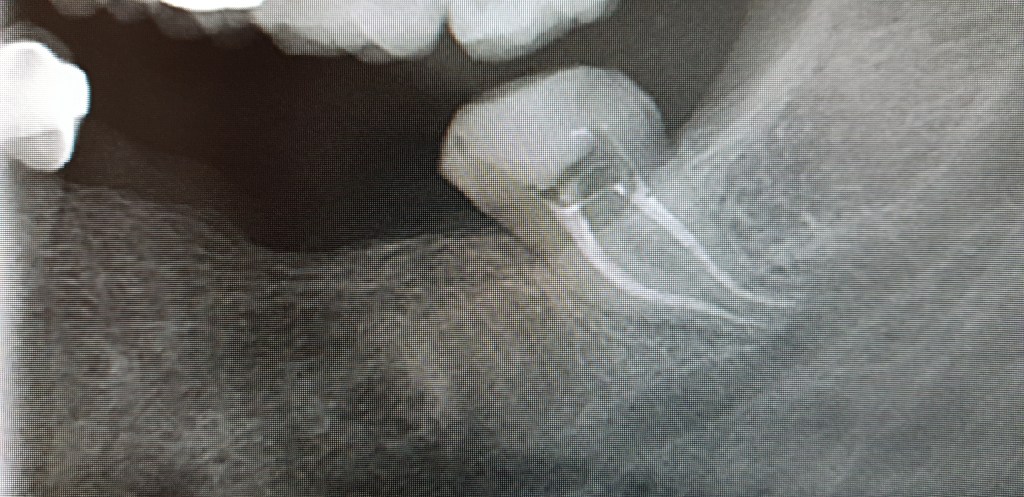
This description highlights a case where it was indeed important and fortunate that a wisdom tooth was present, erupted correctly, and was not removed too early. The tooth, however, had developed deep decay and could only be saved by root canal treatment. Successful root canal therapy of wisdom teeth is often a major challenge for the dentist because the number and shape of their root canals vary widely.
Below you can see a wisdom tooth with an extremely curved root canal system, yet successfully filled in two canals.
This tooth can therefore serve excellently as a posterior abutment for a longer bridge restoration.