
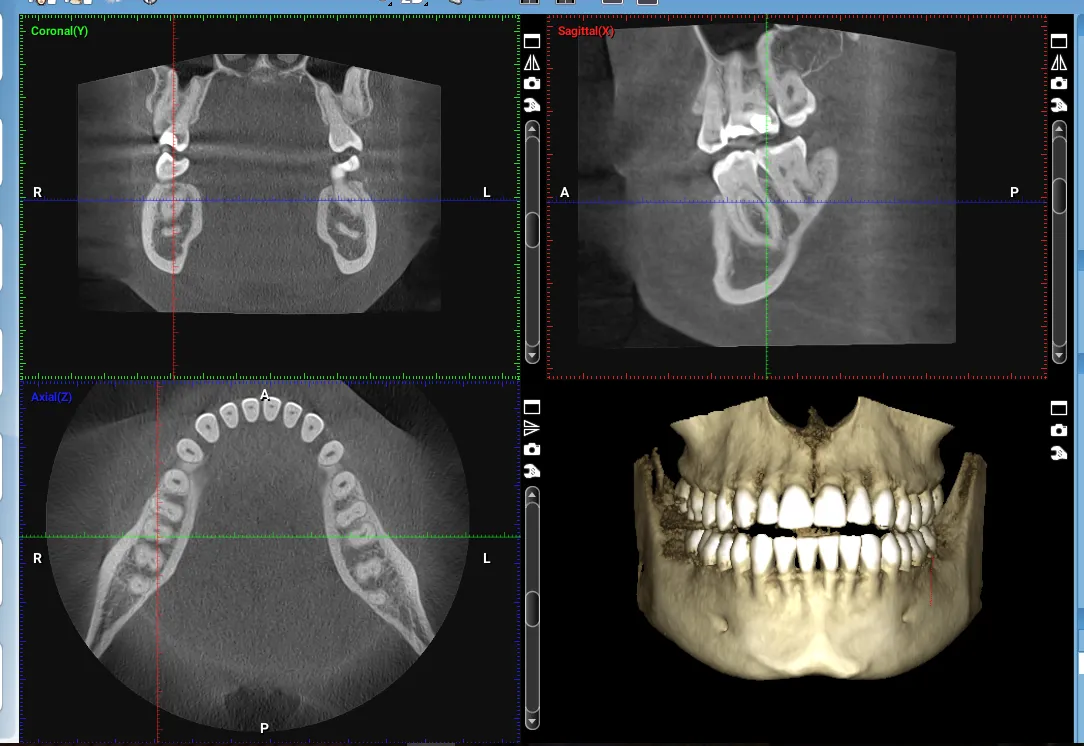
CBCT (cone-beam CT) is a special 3-D imaging technique that provides a much more detailed picture of the teeth, jawbones and surrounding structures than conventional X-rays.
Different types of CBCT scans are used depending on what needs to be examined:
1. Small field of view (FOV) – for a single tooth
Covers only a small area, e.g. one or two teeth.
When used:
- Before or after root canal treatment
- To detect hidden inflammation or cracks
- To locate cysts or other small lesions
Advantage: very detailed image with lower radiation exposure.
2. Medium FOV – for one jaw or one dental arch
Shows a larger region such as the upper or lower jaw.
When useful:
- Planning for dental implants
- Assessing wisdom teeth
- Evaluating the condition of multiple teeth or the bone
3. Large or full-mouth FOV – for complex cases
Covers the entire jaw, the maxillary sinuses and even the temporomandibular joints.
When indicated:
- Full-mouth rehabilitation (e.g. multiple implants)
- Orthodontic treatment planning
- Investigation of jaw joint problems or sinus issues
Should you have a CT scan before a dental examination?
Only if there is a clear indication.
Dental CBCT provides a highly detailed 3-D view of the teeth, bone and nerve pathways, but it is not a routine procedure.
Usually not necessary for:
- General check-ups
- Scaling, fillings or a first consultation
A panoramic or small intraoral X-ray is typically sufficient.
Particularly useful or recommended for:
- Implant planning (to measure bone thickness and locate nerves/sinuses)
- Complicated wisdom tooth extractions
- Root canal treatment when hidden canals or complications are suspected
- Evaluation of temporomandibular joint (TMJ) pain or clicking
- Diagnosing cysts, tumours or trauma when more information is needed
Why not done routinely:
CBCT exposes the patient to a higher radiation dose than standard dental X-rays, so it should be taken only when the diagnosis or treatment planning truly requires it.
Summary
A dental CT is not mandatory before every dental visit, but when your dentist needs more information for a safe and accurate treatment plan, it can be very helpful.
The type of CBCT—small, medium or full-mouth—depends on the specific clinical situation, so always follow your dentist’s recommendation to minimise unnecessary radiation.
(At Evidental, the required type of X-ray—small, panoramic or CBCT—can be taken on site and quickly. All images belong to the patient and can be provided on a data carrier on request.)