

It’s a common question—and even among dentists there isn’t a single “always do this” answer.
Why a single upper central incisor often needs a crown
- Trauma (fracture or major chip) is the most frequent reason.
- After such injury a root canal is often required, and over time the tooth may discolour (yellow or brown).
- In adults (usually over 18), a crown is the standard long-term restoration, both to protect the tooth and to restore its appearance.
The aesthetic challenge
The two upper central incisors dominate the smile.
Even the tiniest difference in:
- shade,
- translucency,
- surface texture, or
- shape
can be noticeable.
This is why many patients—and some dentists—wonder:
“If one incisor needs a crown, should we crown the other as well to ensure a perfect match?”
Two possible approaches
1. Crown only the damaged tooth
- Modern high-end ceramics and skilled dental technicians can reproduce extremely complex shades and surface effects.
- With careful shade-taking, photography, and sometimes a “try-in” session, it is often possible to create a crown that matches the natural neighbour so closely that no second crown is needed.
- This avoids unnecessary preparation of a healthy tooth.
2. Crown both central incisors
- In cases of very complex or unusual tooth colour, or when the neighbouring tooth already shows significant discolouration or wear, making both crowns at the same time can make it easier to guarantee perfect symmetry.
- This is more invasive because a healthy tooth must be ground down.
Practical guidance
- Aesthetic results depend heavily on the experience of the dentist and dental technician, the quality of the lab, and the patient’s cooperation (e.g. attending shade-matching appointments).
- Many excellent results are achieved with only one crown, provided careful planning and high-quality ceramic work.
- If the natural neighbour is expected to change colour soon (for example due to ageing or previous trauma), or if the colour is extremely complex, the dentist might recommend crowning both.
Bottom line:
Whenever possible, preserve the healthy tooth and crown only the one that needs it.
A second crown is considered only if matching the neighbour’s colour and translucency is truly impossible.
Discuss the pros and cons with your dentist and the dental technician—they can judge how reliably a single crown can be matched in your particular case.

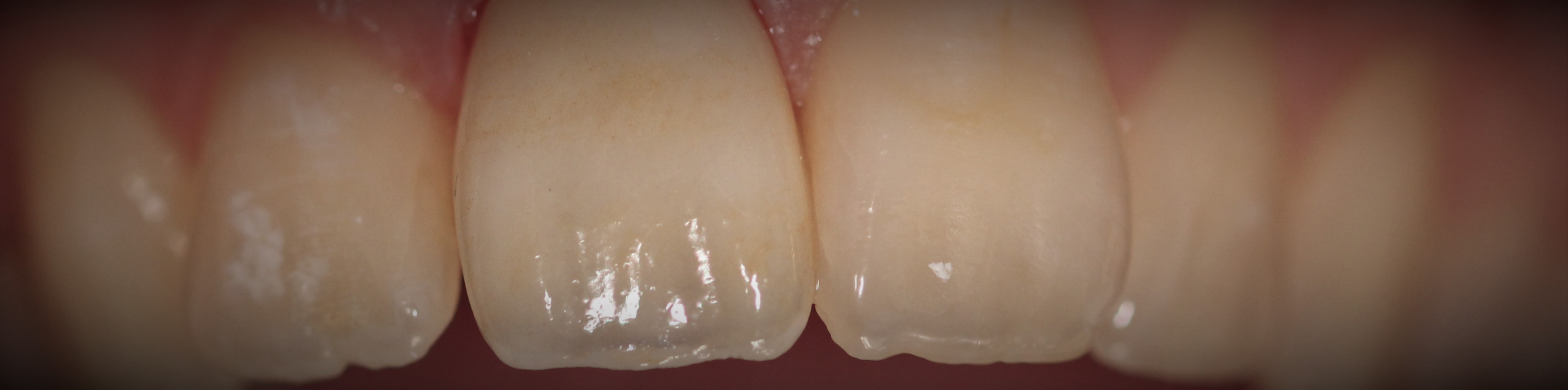
Tip: For single crowns in the centre of the smile, it is advisable to have the final porcelain staining done in the dental laboratory with the patient present.