

Saving a tooth through root canal treatment begins with locating all of its root canals.
To do this, the dentist must know the root anatomy and the possible anatomical variations.
Extra canals in upper molars
Only a few years ago, finding the fourth canal in upper molars was not considered essential because the necessary technology—such as the operating microscope—was not widely available.
Today we know that:
- Upper first molars have this tiny, hidden “extra” canal in about 95 % of cases,
- Upper second molars in roughly 50 % of cases.
Missing these small, hard-to-locate canals is still one of the most common reasons for failure of root canal treatment, leading to recurring symptoms or even loss of the tooth.
Diagnosis and treatment
- Detecting an extra canal may require a special dental X-ray, such as a small-field CBCT scan.
- With a dental operating microscope, these hidden canals can be located and treated with far greater precision.
Retreatment is possible
Importantly, the search for—and proper treatment of—these extra canals can also be performed later, even in teeth that were previously root-filled.
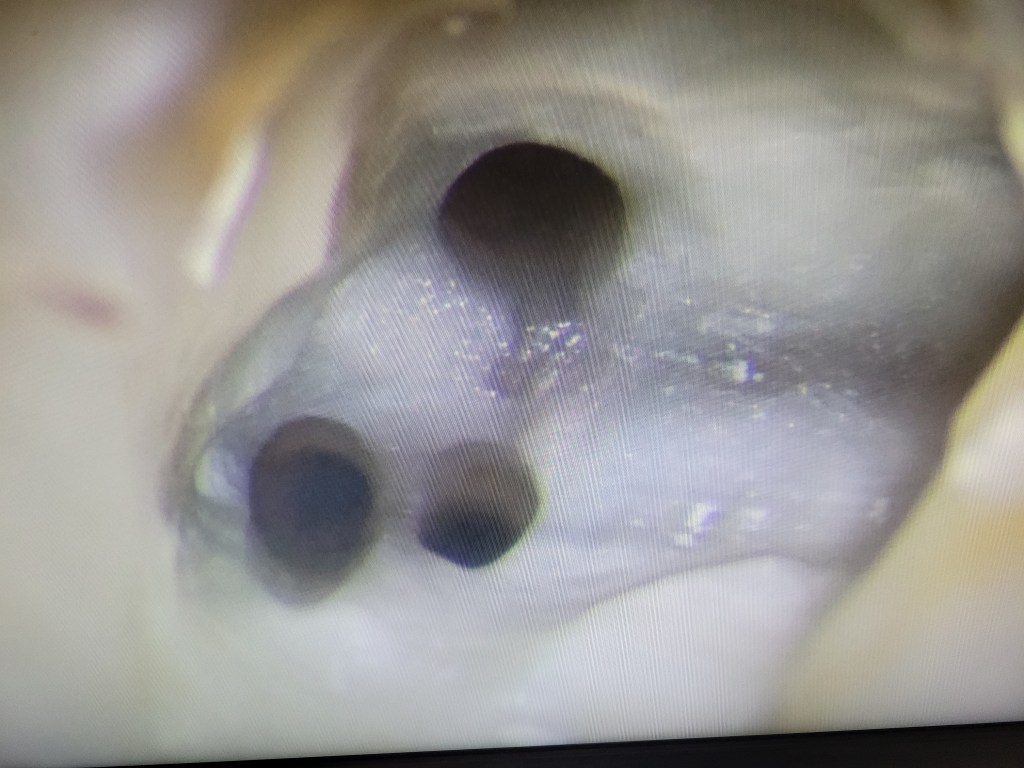
Finding these canals requires time and patience, but it is well worth the effort:
with proper root canal therapy and reconstruction, the tooth can continue to function in its original role for decades.